
Former NC manager denies taking source code — MTN’s story gets a follow-up
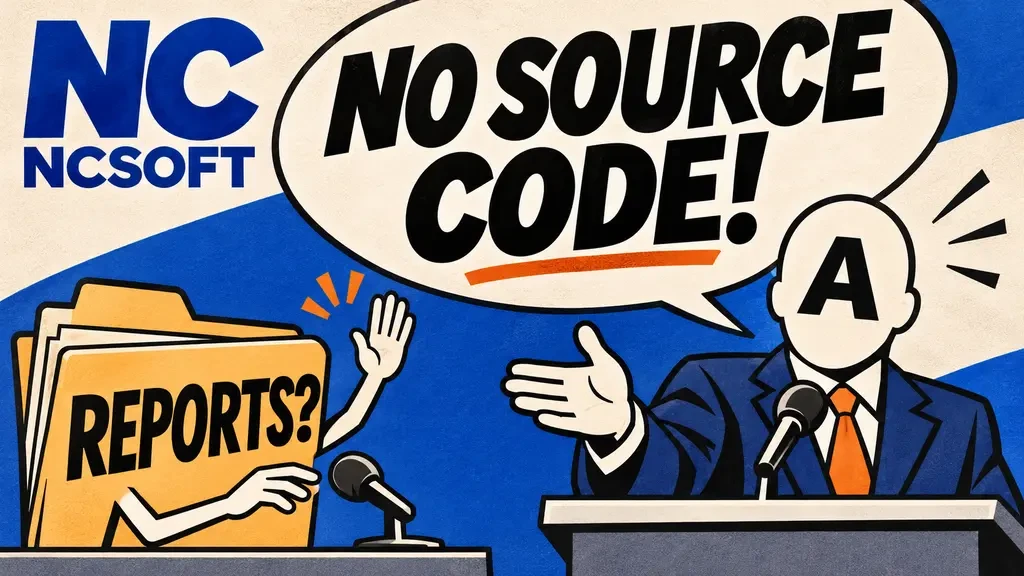
The former manager has now responded to the disciplinary developments at NC. In MTN’s follow-up from November 4, updated on November 5, “A” denies taking source code and art assets out of the company but acknowledges keeping other materials. The outlet also cites the contents of an internal notice — with different allegations against employees “B” and “C”.
In our first article on November 1, we covered MTN’s initial report: “A” had been removed from his post, while “B” and “C” had been temporarily suspended from work. The story now has additional details. Still three letters, but considerably more unknowns.
“A”: denies taking source code, acknowledges keeping reports
In an interview with MTN, “A” said he had not taken source code or art assets out of the company and had not intended to use the previous project for a business of his own.
However, he says some analytical material and reports that he considered to be of low sensitivity ended up among the saved files by mistake. “A” claims he deleted them, did not use them, and caused NC no harm.
Denying that he took source code does not mean he denies keeping any materials at all. Here, the claims about sensitivity, deletion, and lack of harm remain part of one participant’s account, not findings from an independent review. Unfortunately, files do not come with a “treat as harmless on someone’s say-so” setting.
“A” believes the main reason for the disciplinary action was a breach of the ban on outside business activities while working at NC. He confirms that “B” discussed joining his future business with him and prepared ideas and documents. But according to “A”, they decided not to go ahead with the collaboration, and after leaving the company he did not stay in touch with either “B” or “C”.
May, October, and the HR calendar
“A” said he left NC at the end of May 2026 after his contract ended. By his own account, he is unaware of any decision to remove him from his post.
Yet the notice quoted by MTN says that this action was taken as a result of the investigation. Exactly when the decision was made and how it relates to the end of his contract have not been established. The internal announcement dated October 30 concerns measures against “B” and “C” — that date cannot be applied to “A”’s departure.
The HR story has acquired its own side quest: first, find out when an event happened, even though it has already made the news.
MTN also clarifies that the decision to halt development of the unnamed project had been made before “A” left. The game’s name and how far along it was remain undisclosed. So looking among NC’s known projects for “that stolen game” may be entertaining, but it will not produce any more evidence.
“B”, Confluence, and unintended readers
According to NC’s notice as reported by MTN, the allegations against “B” include helping prepare a competing business, using a significant share of working hours for outside tasks, and a conflict of interest.
A separate allegation concerns repeatedly posting confidential project documents in a personal Confluence account without adequate protection. The notice claims that this made the information accessible to outsiders without the appropriate authorization.
A growing audience usually makes marketers happy. But internal project documents do not need a fan base of their own.
For “C”, the quoted description lists outside business activities and a conflict of interest. There is no Confluence item on his list. Appearing in the same news story does not mean facing the same set of allegations. Even in the same party, everyone needs their own quest log here.
However, the publication does not include the full original notice — only MTN’s quotations are available. “Accessible to outsiders” also does not mean “open to the entire internet”: the settings, file list, and details of any viewing or downloading have not been made public.
Nor has it been established whether the documents cited in the allegation against “B” are the same reports that “A” says he kept. They should not be lumped into a single folder just to make the story tidier.
NC has responded. Too soon for the end credits
Unlike the information available when our first article was published, there is now a comment explicitly attributed to the company: NC said it had no further explanations beyond the internal notice. No extended edition of the corporate statement is planned for now.
MTN separately reports that the company does not plan to pursue civil or criminal action against those involved. This is the outlet’s reporting, not a published commitment by NC to forgo any claims. The report does not support statements such as “case closed” or “those involved have been exonerated.”
The story has become more specific: we now have “A”’s position, differences in the allegations against “B” and “C”, and a description of the alleged disclosure of documents. But the material reviewed still contains no public technical examination of the files or responses from “B” and “C” themselves.
Choosing who is guilty based on how much you like the company or how convincing you find the interview is certainly quicker. But that is a vote, not an investigation.
In our first article, we wrote: moving from “suspected” to “they stole it” requires evidence. After this follow-up, we should add: so does moving from “he denies it” to “it has been disproved.”